Becoming a journeyman electrician is a significant milestone in a rewarding career, marking the transition from novice to skilled tradesperson. Typically, this level requires a comprehensive training period of around 8,000 to 10,000 hours, combining hands-on experience with classroom instruction. This journey is crucial not just for mastering technical skills, but also for understanding safety protocols, industry standards, and advancing toward higher certifications.
As the demand for skilled electricians continues to rise, navigating the training requirements can feel overwhelming. Readers often seek clarity on how many hours of training are needed to reach this essential stage. Understanding these requirements is not only vital for compliance with licensing regulations but also pivotal for ensuring long-term career success and job security in a rapidly evolving field. Join us as we break down the training path to becoming a journeyman electrician, highlighting what to expect and how to excel in this critical profession.
How Many Hours is Required for Journeyman Electrician Training?
Becoming a journeyman electrician is a significant milestone that requires a substantial investment of time and effort in training. Typically, aspiring electricians must complete a minimum of 8,000 to 10,000 hours of hands-on experience under the supervision of a licensed electrician, which usually takes about four to five years of apprenticeship. This practical training is complemented by classroom instruction that covers key topics such as electrical theory, blueprint reading, and local building codes.
The breakdown of this training often includes:
- On-the-Job Training: 4,800 to 6,000 hours, where apprentices learn practical skills, safety procedures, and the operation of tools.
- Classroom Instruction: About 1,200 to 2,000 hours, focusing on electrical theory, the National Electrical Code (NEC), and local regulations.
Understanding the importance of both components is crucial; it ensures that candidates not only develop the necessary skills but also meet state certification requirements. Each state may have its specific mandates regarding the total hours needed and the content of the training courses. Thus, it’s essential for apprentices to consult their state’s licensing board to verify precise hour requirements and any additional prerequisites.
Successfully completing the allotted training hours is not just a step towards licensure; it also equips future journeyman electricians with the knowledge and skills necessary to navigate the complexities of the electrical industry, paving the way for a successful career.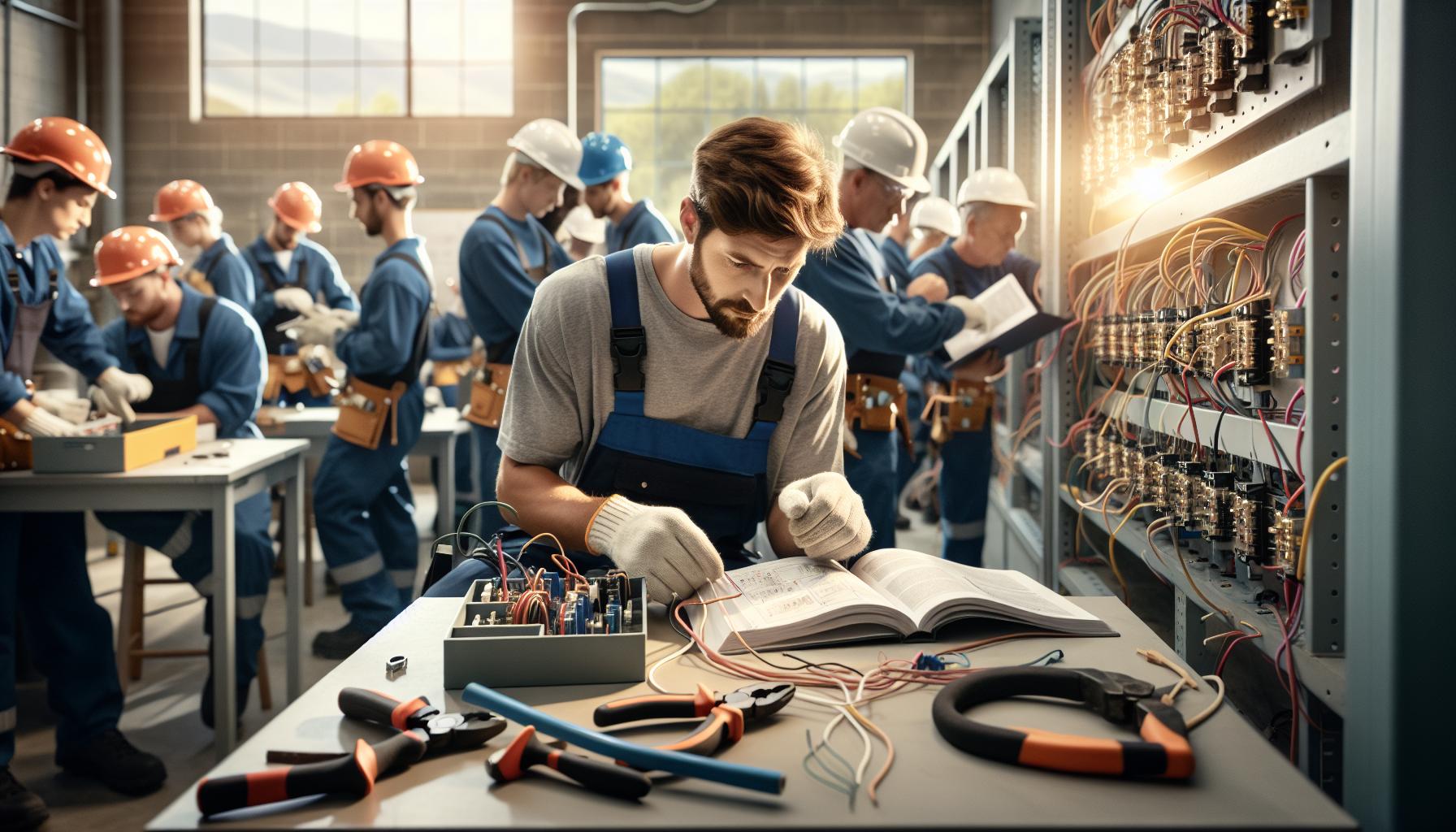
Understanding the Journeyman Electrician Pathway
Becoming a journeyman electrician involves navigating a structured pathway that integrates extensive hands-on experience with theoretical education. One of the most critical aspects of this journey is the completion of a defined number of training hours. Typically, this requires aspiring electricians to accumulate between 8,000 to 10,000 hours of combined practical and classroom training over several years. This pathway not only enhances technical skills but also ensures compliance with state-specific licensing requirements.
Practical Experience and Classroom Instruction
The journey begins with an apprenticeship that spans about four to five years, during which apprentices must log a significant portion of their hours on the job. Most programs stipulate that around 4,800 to 6,000 hours be dedicated to on-the-job training, allowing apprentices to gain essential skills in real-world settings. This phase is critical, as it includes learning safety protocols, tool operation, and troubleshooting techniques. In parallel, apprentices are required to complete 1,200 to 2,000 hours of classroom instruction. This educational component covers vital subjects, such as electrical theory, the National Electrical Code (NEC), electrical safety, and local building regulations, equipping them with the theoretical foundation necessary to excel in the field.
Importance of Licensing and Certification
Successfully fulfilling these training requirements leads to acquiring journeyman electrician status, which is essential for practicing legally. Each state has its licensing board that dictates specific mandates regarding training hours and educational content. Therefore, it is crucial for candidates to consult their state’s requirements to ensure they meet all necessary criteria for licensure. Understanding and navigating this pathway effectively can significantly impact career opportunities and advancement in the electrical trade.
Pursuing a career as a journeyman electrician undoubtedly involves considerable effort, but the payoff-both in terms of career satisfaction and financial reward-can be substantial. By adhering to the prescribed training frameworks and honing their skills, aspiring electricians position themselves for a fruitful career in one of the industry’s most in-demand professions.
State-Specific Training Requirements for Electricians
Each state in the U.S. has unique requirements for aspiring journeyman electricians, often influenced by local regulations, labor markets, and safety standards. As a result, understanding these state-specific training requirements is crucial for anyone looking to enter the electrical trade. For example, while most states mandate around 8,000 hours of combined education and on-the-job training, the breakdown between classroom instruction and practical experience may vary significantly. In states like California, for instance, prospective journeyman electricians must complete electrical training courses approved by the Division of Apprenticeship Standards, leading to a structured path that balances theory with hands-on practice.
State licensing boards typically oversee the educational and practical experience requirements, which can include an apprenticeship program of four to five years. This program often demands a specific number of hours allocated to different aspects of the job. States like Texas may require 4,000 to 6,000 hours of on-the-job training along with 1,000 to 1,500 hours of classroom education. On the other hand, states such as New York often have more stringent classroom hour requirements, emphasizing a theoretical foundation in topics such as electrical design, safety codes, and advanced troubleshooting techniques.
Moreover, aspiring electricians should be aware of local regulations regarding any additional certifications that may be required before they can practice independently. In practical terms, this means engaging with local trade organizations or unions, which frequently offer resources, mentorship, and detailed guides on navigating state-specific requirements.
As the profession evolves with new technologies, states are also beginning to incorporate modern topics such as renewable energy systems, smart home technology, and electrical vehicle (EV) charging systems into their curricula, adapting to the changing landscape of the electrical trade. Thus, staying informed and proactive about state regulations will not only prepare electricians for licensure but also enhance their employability in an increasingly competitive job market.
The Importance of Apprenticeship Hours in Electrician Training
Aspiring to become a journeyman electrician entails a commitment to extensive training, particularly through apprenticeship hours, which are critical for developing the skills and competencies required in this trade. An electrician’s apprenticeship not only provides on-the-job training, but it also serves as a foundational element that bridges theoretical knowledge with practical application. This combination is essential for understanding complex electrical systems, safety protocols, and modern technologies involved in today’s electrical work.
During the apprenticeship, which typically spans four to five years, trainees are required to log a significant number of hours-often between 4,000 and 8,000. These hours are generally split between classroom education and hands-on experiences in real-world settings. For example, in many states, apprentices spend approximately 1,000 to 1,500 hours in structured classroom environments covering vital topics like electrical theory, code compliance, and safety standards, while the remaining time is dedicated to supervised work with seasoned electricians. This practical experience is invaluable, as it allows apprentices to confront real challenges, troubleshoot issues on-site, and apply safety best practices-all of which are critical for gaining independence as a licensed electrician.
Furthermore, the comprehensive nature of these apprenticeship hours equips graduates with a competitive edge in the job market. Employers favor candidates who come equipped with not just theoretical knowledge but also a rich practical background. This real-world experience helps mold proficient, confident electricians who can handle various scenarios, from basic wiring to complex electrical installations involving modern innovations like smart home technology and renewable energy systems. Consequently, the apprenticeship phase becomes more than just a stepping-stone; it is an essential period for refining technical skills, learning from experienced professionals, and establishing a professional network within the electrical industry.
Investing time in an apprenticeship ultimately pays off, not just in the form of enhanced skills but also through greater job opportunities and potential for higher salaries. The knowledge gained during these hours lays the groundwork for a successful and sustainable career, making it a crucial investment in a journeyman electrician’s future.
Core Curriculum for Electrician Apprenticeships
The foundation of a successful career as a journeyman electrician begins with a comprehensive and structured curriculum during apprenticeship training. This curriculum is designed to equip apprentices with both theoretical knowledge and practical skills necessary to navigate the complexities of electrical systems. On average, apprentices can expect to engage in upwards of 1,000 hours of classroom instruction paired with hands-on training, emphasizing the importance of learning in diverse environments.
This instructional curriculum typically includes crucial subjects such as:
Core Subjects in the Electrical Apprenticeship Curriculum
- Electrical Theory: Understanding the principles of electricity, including voltage, amperage, resistance, and how they interact in electrical circuits.
- Blueprint Reading: Developing the ability to interpret electrical schematics and installation plans effectively, which is vital for any electrical project.
- National Electrical Code (NEC): Familiarization with code standards is essential for ensuring safety and compliance in all electrical installations.
- Safety Practices: Training on workplace safety and protocols to minimize risks, including the use of personal protective equipment (PPE).
- Wiring Techniques: Learning proper methods for wiring systems, handling electrical components, and ensuring reliable connections.
- Load Calculations: Gaining the skills to perform calculations that determine the electrical load requirements for different applications.
- Modern Technologies: Insights into contemporary advancements such as smart home technologies, renewable energy systems, and electric vehicle (EV) charging equipment.
Through this well-rounded core curriculum, apprentices not only gain essential technical skills but also learn to think critically and apply problem-solving strategies in real-world situations. This blend of knowledge and practical experience significantly enhances their employability and prepares them for the challenges they’ll face upon entering the workforce as licensed electricians. The mastery of these subjects is vital not just for licensing examinations but for building a robust professional career that can adapt to the constantly evolving electrical landscape.
Licensing and Certification Steps for Journeyman Electricians
To transition from an apprentice to a journeyman electrician, it is essential to navigate through various licensing and certification steps that validate your skills and knowledge in the field. Each state has specific requirements, but generally, the pathway involves completing a set number of apprenticeship hours, passing written exams, and maintaining up-to-date knowledge of electrical codes and standards.
First, you must accumulate a required amount of on-the-job training hours under the supervision of a licensed electrician, typically ranging from 2,000 to 8,000 hours, depending on state regulations. This hands-on experience is crucial as it provides the practical skills necessary for the journeyman level. Additionally, you will need to complete formal classroom instruction, which usually requires at least 144 hours per year in related educational topics, including electrical theory, safety practices, and the National Electrical Code (NEC).
Once you have completed the required apprenticeship hours and coursework, you can apply for the journeyman examination in your state. This exam typically includes both a written component, consisting of multiple-choice questions related to electrical principles and codes, and may require practical assessments. To prepare, many candidates benefit from study guides and review courses to brush up on essential topics such as load calculations, wiring techniques, and blueprint reading. Passing this exam is crucial as it demonstrates your competency and understanding of electrical systems, ensuring safety and compliance in your future work.
After successfully becoming licensed as a journeyman electrician, it is important to stay informed about continuing education requirements, which vary by state. Many states mandate ongoing education to maintain licensure, emphasizing the evolving nature of electrical technologies and regulatory standards. This commitment not only enhances your expertise but also positions you favorably for future advancements in your electrical career, including potential specialization or even pursuing master electrician status. By adhering to these steps and staying dedicated to your professional growth, you will not only achieve licensure but also contribute effectively to the safety and innovation in the electrical industry.
Reciprocity in Electrician Licensing Across States
Navigating the landscape of electrician licensing can be complex, especially when considering how reciprocity agreements affect your ability to work across state lines. Reciprocity refers to the mutual acceptance of licenses from one state to another, allowing journeyman electricians to practice their trade in states with which their home state has an agreement. This can significantly streamline the process for electricians looking to relocate or take work outside their home state.
The specifics of reciprocity agreements vary greatly between states, so it’s essential to familiarize yourself with both your home state’s regulations and those of any state in which you wish to work. Some states may require additional documentation or even a verification process to ensure compliance with local code requirements, while others may honor your existing license without additional hurdles. Understanding these nuances can save you time and reduce potential obstacles to your career advancement.
To better illustrate how reciprocity works, consider states like Texas and Florida, which have comprehensive agreements with several neighboring states. This enables electricians to transfer their licenses more easily, provided they meet any additional inspection or examination requirements. In contrast, some states might have no reciprocity agreements at all, requiring electricians to undergo the entire licensing process anew.
Staying informed about your state’s reciprocity agreements not only enhances your career flexibility but also empowers you to explore opportunities beyond your geographical confines. Make sure to check with your state’s licensing board for the most current information on reciprocity, as regulations can change and may impact your planning as you advance to the journeyman level. This proactive approach ensures that you maintain compliance while maximizing your employment opportunities across state lines.
Average Salary for Journeyman Electricians by Experience
The journey to becoming a journeyman electrician not only requires substantial training hours but also translates into varying salary ranges, significantly dependent on experience. A journeyman electrician’s average annual salary can be indicative of their skill level, hands-on experience, and geographical region. For instance, nationwide, the average salary for journeyman electricians is approximately $64,700, which breaks down to around $31 per hour. However, the salary can vary, with figures ranging from $51,518 to $77,500 based on experience and location [3].
Experience plays a critical role in determining a journeyman electrician’s earnings. Entry-level journeyman electricians can expect salaries on the lower end of the spectrum. As electricians gain more hands-on experience and take on specialized roles-such as working with emerging technologies like smart home systems or EV charging installations-they can command higher wages.
In specific states, these salary differences are even more pronounced. For example, California offers a higher average annual salary for journeyman electricians at $71,400, equating to $38 per hour, with some electricians making between $56,881 and $85,346 [2]. Such figures emphasize the importance of choosing not only the right training programs but also the geographical areas for work, as regional demand for electrical work can significantly impact earning potential.
To maximize your career as a journeyman electrician, gaining diverse experience in various aspects of electrical systems and staying updated on industry trends and standards is paramount. Embracing continued education and seeking out advanced certifications can further enhance job prospects and salary growth over time.
Regional Salary Differences for Electricians
The geographic location of a journeyman electrician plays a crucial role in shaping their earning potential. Salaries can fluctuate dramatically not only due to local demand for electrical work but also varying costs of living in different regions. For instance, states such as California, New York, and Massachusetts often report higher average wages for electricians, reflecting both higher living costs and demand for skilled labor in urban areas. In California, the average salary reaches approximately $71,400 annually, translating to about $38 per hour, whereas entry-level electricians can earn significantly less, starting at around $56,881 to $85,346 based on experience and specialization [2].
Conversely, regions with lower costs of living, such as many areas in the Midwest or the South, may offer lower yearly wages for electricians. For example, journeyman electricians in states like Michigan or Florida might see salaries closer to the national average, around $64,700 annually or $31 per hour. However, even within these states, urban centers typically present greater opportunities and higher pay compared to rural areas. It’s essential for aspiring electricians to consider both the immediate financial returns and the long-term career growth offered by their chosen location.
To maximize earning potential, electricians should not only attain their journeyman certification through the requisite training and apprenticeship hours but also pursue specializations that are in high demand. Keeping abreast of new technologies such as smart home systems and EV installations can further enhance salary prospects. As the industry evolves, regions with robust developments in electrical technology will likely yield higher pay scales for skilled workers. Aspiring electricians should therefore research local markets and trends to make informed decisions that align with both career aspirations and financial goals.
Essential Tools and Equipment for Electricians
For electricians stepping into the world of journeyman status, having the right tools is essential not only for accomplishing tasks efficiently but also for maintaining safety and ensuring high-quality work. The tools of the trade are an investment that directly corresponds to the professional’s ability to perform effectively in diverse electrical environments. With advancements in technology and growing demands for specific services, understanding which tools are necessary can significantly impact an electrician’s career trajectory.
One of the fundamental tools every electrician should have is a reliable multi-tool, which combines several functions like cutting, crimping, and stripping wires into a single device. This tool is invaluable for quick fixes and adjustments. Additionally, insulated screwdrivers are essential for safely working on live circuits, as they provide protection against electrical shocks. Electricians should also possess a quality multimeter for accurately measuring voltage, current, and resistance, which are crucial for diagnosing electrical issues. Coupling this with a cable tester allows for quick troubleshooting of wiring and connections, ensuring everything operates smoothly.
Core Tools for Every Electrician
- Wire Strippers: Essential for removing insulation from wire ends without damaging the wire itself.
- Power Drill: Necessary for drilling holes for electrical boxes and conduits.
- Tape Measure: For precise measurements in installations and layout plans.
- Pry Bars and Fish Tape: Useful for maneuvering wires through walls or tight spaces.
Investing in safety equipment is equally important. Personal protective equipment (PPE) such as hard hats, gloves, and safety glasses protects electricians from potential hazards on the job. With the rise of smart home technology and EV (electric vehicle) charging stations, expanding your toolkit to include specific gadgets for these modern applications can also enhance your marketability. Electricians should consider specialized tools and equipment for tasks like installing smart switches or troubleshooting smart technology interfaces to stay current in this evolving industry.
Ultimately, integrating a strong foundation of tools, proper training, and specific certifications will position electricians to thrive as journeyman professionals. As the industry demands continue to evolve, continuous learning and enhancement of one’s toolkit will be key to maintaining relevance and excellence in their work.
Electrical Fundamentals Every Apprentice Must Know
Understanding electrical fundamentals is crucial for every apprentice on the journey to becoming a journeyman electrician. A solid grasp of concepts such as voltage, current, resistance, and power not only underpins effective work practices but also enhances safety. For instance, voltage (measured in volts) represents the electrical force that drives current through a circuit, while current (measured in amperes) signifies the flow of electric charge. Recognizing the relationship between these elements, defined by Ohm’s Law (V = IR), enables electricians to troubleshoot and design circuits efficiently.
Another critical aspect is load calculations, which are essential for ensuring that circuits can safely handle the electrical demands placed upon them. An understanding of load types-namely, resistive, inductive, and capacitive loads-helps electricians make informed decisions about circuit design and the selection of appropriate breakers and wiring. For example, while resistive loads are typically straightforward, inductive loads, such as motors, require more nuance due to their inrush current, which can be several times higher than their running current.
Safety protocols and practices cannot be overstated, given the inherent risks in electrical work. Familiarity with the National Electrical Code (NEC) is vital as it provides the regulations designed to prevent electrical hazards. Apprentices should prioritize understanding grounding techniques, circuit protection devices, and proper installation methods to mitigate risks. Hands-on experience, combined with theoretical knowledge, prepares electricians to handle real-world scenarios safely and effectively.
Lastly, keeping pace with modern technologies, including smart home systems and EV charging stations, is essential. Knowledge of these advancements allows electricians to adapt to evolving customer needs, ensuring they remain competitive in the industry. As the electrical field expands, so too does the importance of ongoing education and certification to address new challenges and technologies, thereby solidifying an electrician’s position as a valuable asset in any setting.
Modern Electrical Technologies and Their Impact on Training
Modern advancements in electrical technologies are transforming the training landscape for aspiring journeyman electricians. The integration of smart home systems, electric vehicle (EV) charging infrastructure, and renewable energy sources like solar panels necessitates a shift in the core curriculum of electrician apprenticeships. This evolution not only impacts the theoretical knowledge required but also emphasizes practical skills that align with the latest industry demands.
As electrical systems become increasingly complex, electricians must be well-versed in the latest programmable technologies. For instance, trainers are now incorporating modules on smart systems that include remote control installation, home automation devices, and energy management systems into their curricula. This ensures that new electricians can not only install traditional electrical systems but also effectively implement these modern solutions that enhance energy efficiency and convenience for consumers.
Moreover, the growing prevalence of EVs is prompting electricians to gain proficiency in specific installation and maintenance tasks related to EV charging stations. Training programs are adapting to include specialized courses that cover the unique electrical requirements of these charging systems, safety considerations, and the regulations involved in their installation. Becoming adept in these areas can significantly expand a journeyman electrician’s marketability and expertise in a rapidly evolving job market.
Additionally, understanding sustainable practices and green technologies is becoming increasingly necessary. Today’s apprentices are not only learning how to install conventional systems but also being trained in the use of solar energy technologies and energy efficiency standards. This knowledge is critical as more homeowners and businesses look to reduce their carbon footprints through innovative electrical solutions. In sum, embracing modern technologies in training prepares journeyman electricians to meet changing consumer preferences and regulatory requirements, ensuring their skills remain relevant in a dynamic industry.
Frequently asked questions
Q: How many hours do you need to become a journeyman electrician?
A: Typically, aspiring journeyman electricians need to complete around 8,000 hours of on-the-job training combined with at least 500 hours of classroom instruction. This training often occurs through apprenticeship programs. For specific state requirements, refer to your local licensing board.
Q: What are the training requirements for a journeyman electrician?
A: Training requirements generally include completing an apprenticeship program that encompasses both hands-on experience and theoretical education. The process usually requires about 4-5 years of training before you can qualify for the journeyman exam.
Q: How long does an apprenticeship for electricians typically last?
A: An electrician apprenticeship typically lasts 4 to 5 years, during which apprentices must complete a minimum number of on-the-job training hours alongside classroom learning. This structure ensures they gain the necessary skills for professional practice.
Q: Are all states the same regarding journeyman training requirements?
A: No, journeyman training requirements can vary significantly by state. Each state sets its own standards regarding the number of training hours, classroom instruction, and exam eligibility. It’s crucial to check with your state’s licensing authority for accurate information.
Q: What skills are essential for becoming a journeyman electrician?
A: Essential skills include a deep understanding of electrical systems, problem-solving abilities, attention to detail, and knowledge of safety regulations. Additionally, hands-on experience gained during apprenticeship is vital for proficiency.
Q: What is the role of continuing education for journeyman electricians?
A: Continuing education is essential for journeyman electricians to stay updated on the latest industry practices, technologies, and safety regulations. Many states require licensed electricians to complete continuing education courses to renew their licenses.
Q: Can journeyman electricians work in different states?
A: Yes, journeyman electricians can work in different states, but they may need to meet specific licensing or reciprocity requirements. This often involves passing an exam or fulfilling additional training if the state has different standards.
Q: What career advancement opportunities exist for journeyman electricians?
A: After gaining experience as a journeyman electrician, individuals can pursue advanced roles such as master electrician, electrical contractor, or specialized positions in areas like renewable energy or electrical design. Continuing education can also facilitate these advancements.
In Summary
As you consider pursuing the journeyman electrician path, remember that completing the required hours of training is just the beginning. This qualification opens doors not only to advanced certifications and licensing but also to greater earning potential. Don’t hesitate to explore resources on electrical fundamentals, modern technologies like EV chargers, and essential tools that can enhance your skills and safety in the field.
Ready to take your next step? Dive deeper into our guides on electrician career stages, certifications, and even salary expectations by region. If you have questions about the journey ahead or want to discuss your career plans, leave a comment below or reach out to our community for support. With the right information and resources, you’re well on your way to becoming a skilled journeyman electrician. Start today to secure your future!